
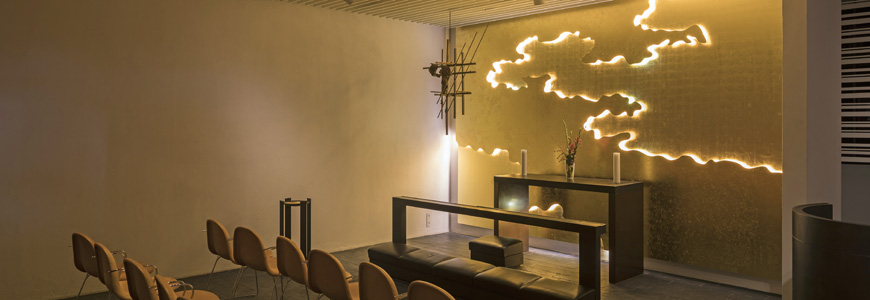
Rigshospital Church – Fashioning the Atmosphere of Sacred Spaces
The church at Rigshospitalet houses a range of emotions, whether visiting in sickness or celebration, seeking answers to life’s big questions or reframing new perspectives on life. Although not a multi-faith church, it offers everyone a space to go for prayer or contemplation. Visitors are from many walks of life, joining through the unifying experience of what it means to be human. Maybe the visitors have a regular religious practice or perhaps have never been inside of a church before, entering this church may be the beginnings of a new journey or a one-time visit. The interior of this church therefor should be functional, easily understandable, yet engaging. Perhaps there is an element within the intervention you create that can be held within the visitor and recalled later.
A church is a feature of most hospitals, yet it was overlooked during construction of Rigshospitalet, which makes this space unique. Without familiar devices such as stained-glass windows (this church has no windows) or monumental architecture, the interior atmosphere within this intimate church is created through other means, where the spatial interventions work even harder to create a feeling of awe. These interventions transform the once forgotten church, into an intense spatial experience.
There are four hospital priests who deliver many things including; church services, prayers, blessings, talks, developmental work and pastoral care, how can the physical space of the church support the work of the priests? Or perhaps provide a red-thread from the church to their office. There are guest books, going back over many years, where visitors have written their names, prayers, messages, thanks, extracts from the bible or comments. There are numerous stories within these pages. There is also a prayer box, where names of those who would like to be acknowledged in the priest’s prayers are written. Candles (battery powered for safety) can also be lit. These offer active elements within the space of the church, allowing people to contribute and leave something behind after they have left.
Historically and through to present day, there is a rich tradition of textiles used in churches and displayed during ceremonies and special occasions. These religious textiles showcase technical expertise and often using the finest of materials, where the textiles are used to supplement the ceremony, conveying reverence and elevating the status of the religious experience. Using your skills in developing colour stories and your technical understanding of yarns and textile construction techniques, how can you build or extend the narrative of the hospital church? How can you heighten the religious experience, fulfilling traditional expectations and offering something unique, enhancing the church within this hospital as a place for reflection and reverence.
Partnere
Det Kongelige Akademi
